
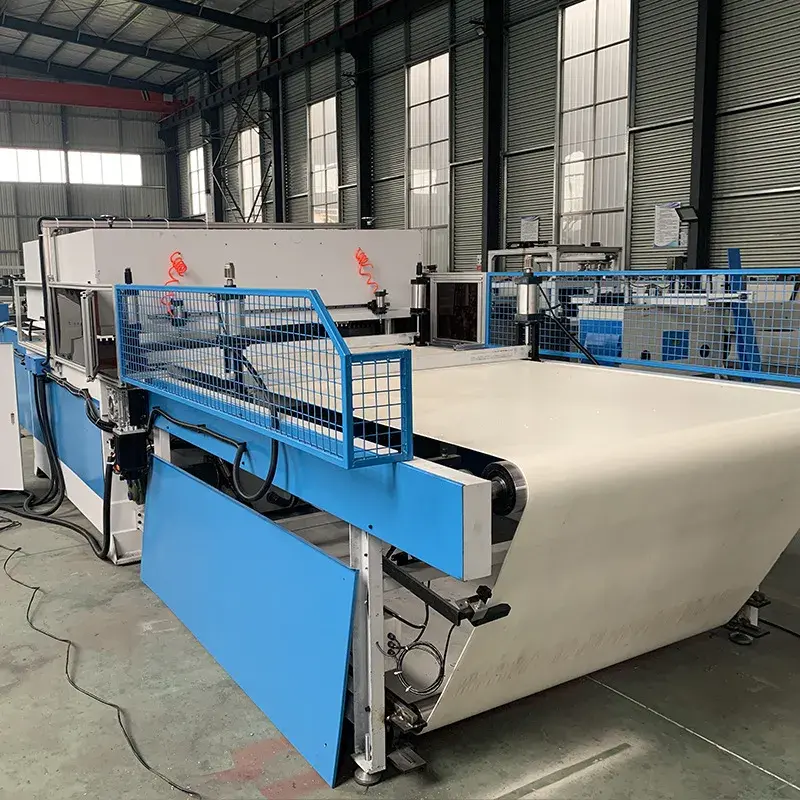
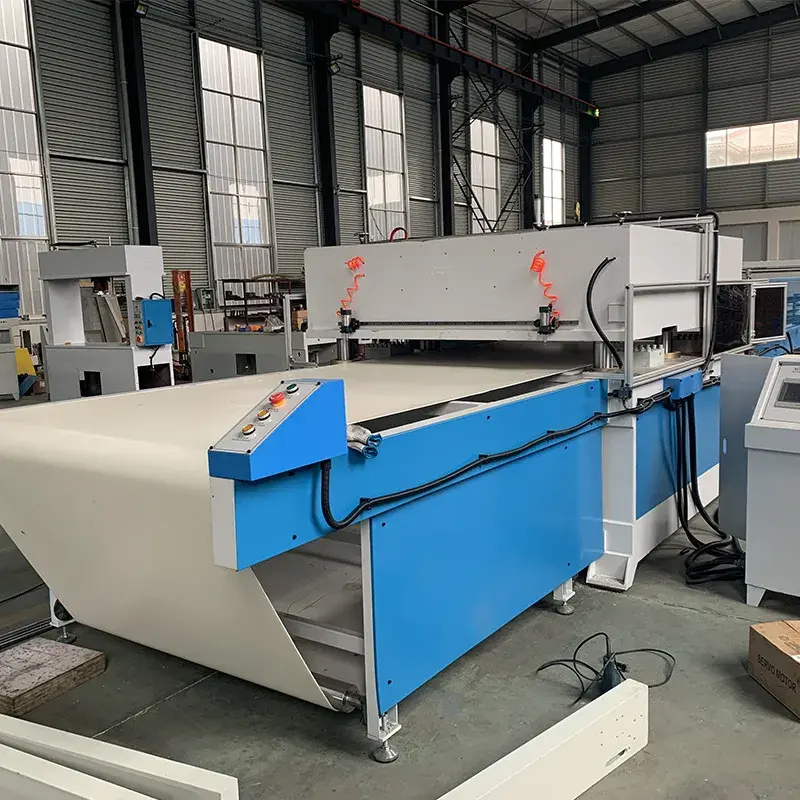
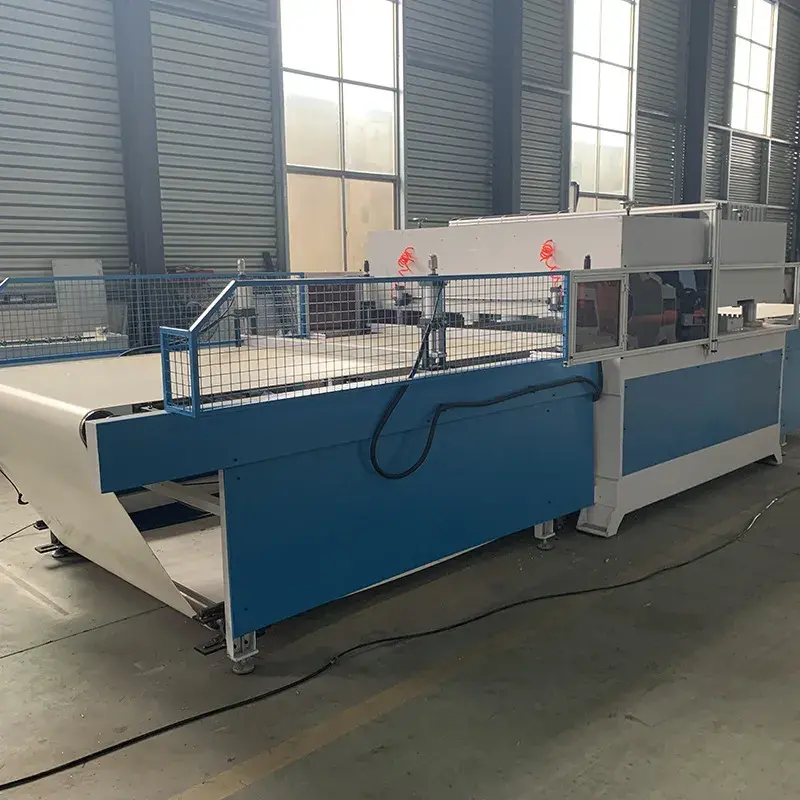
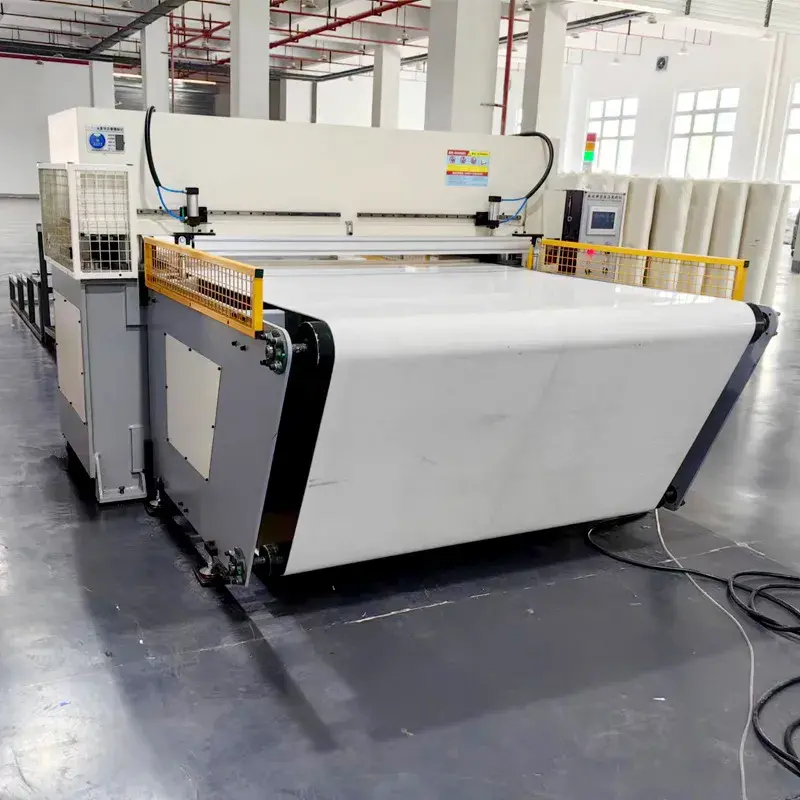
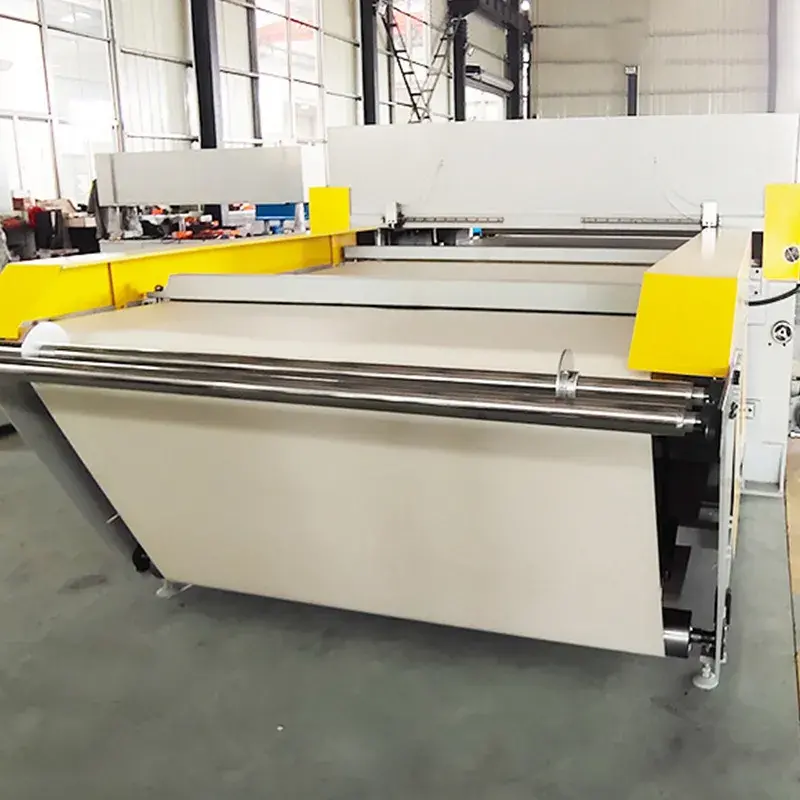
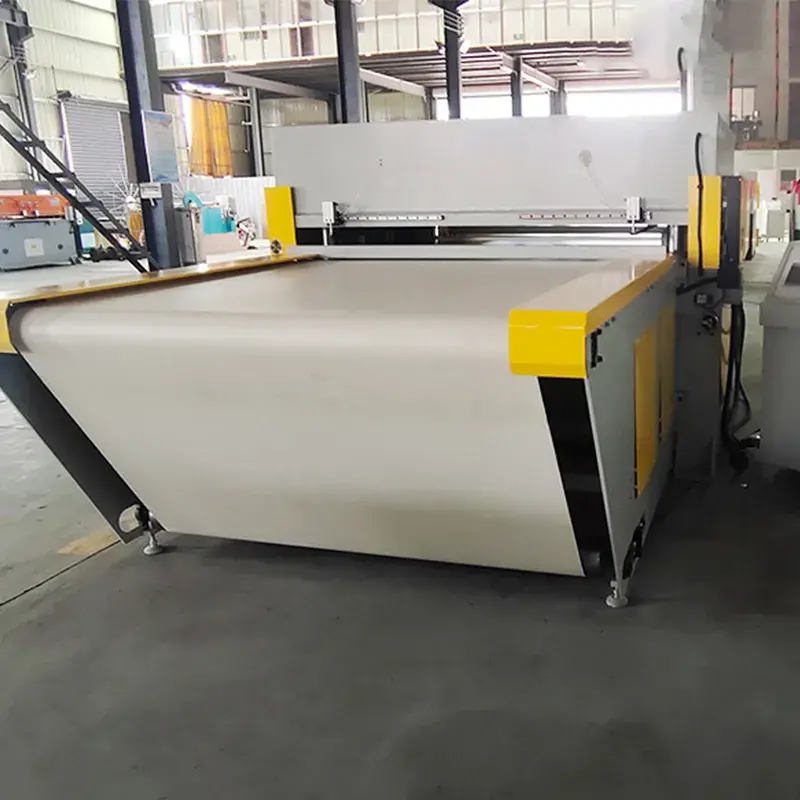
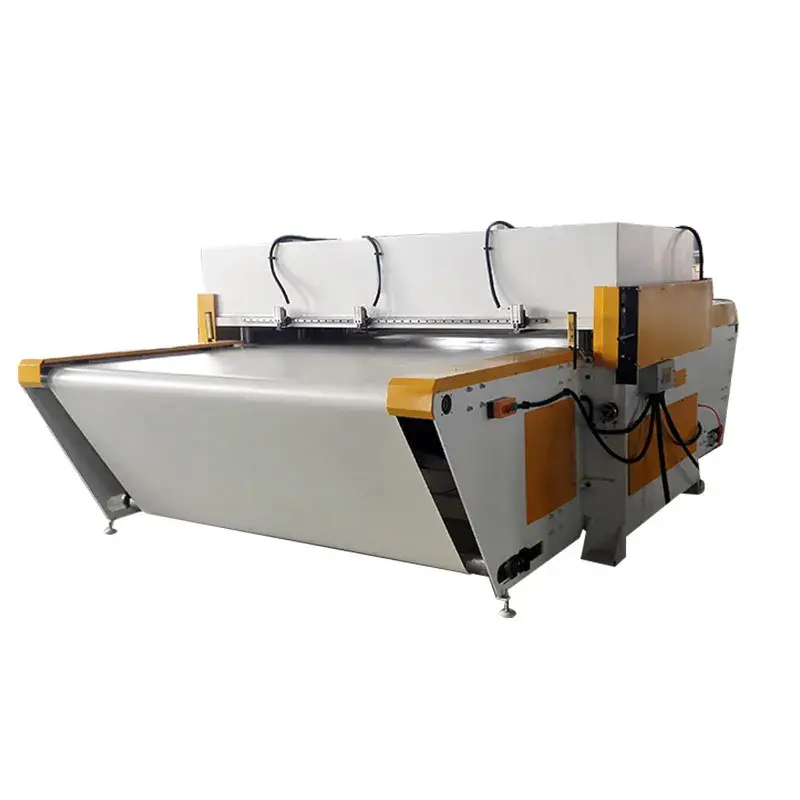
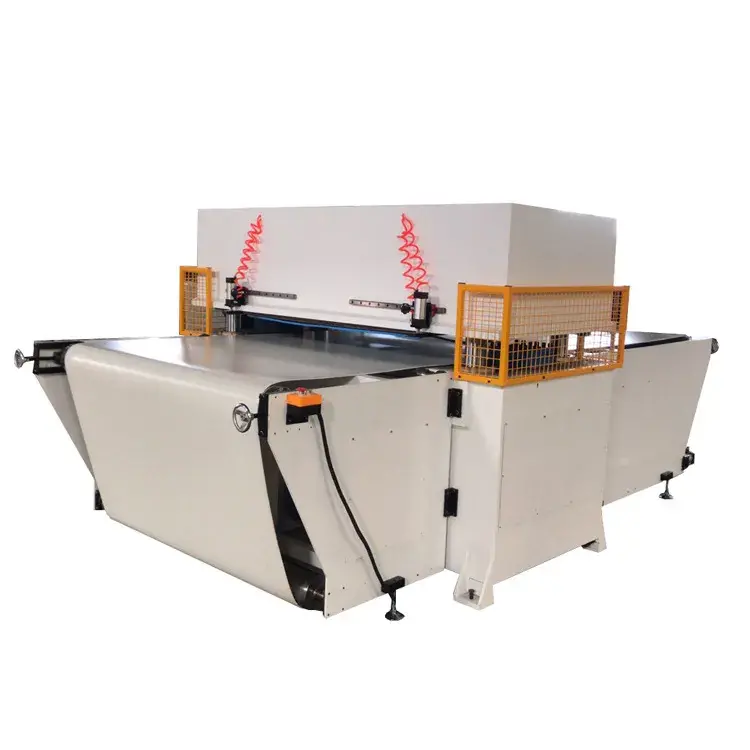
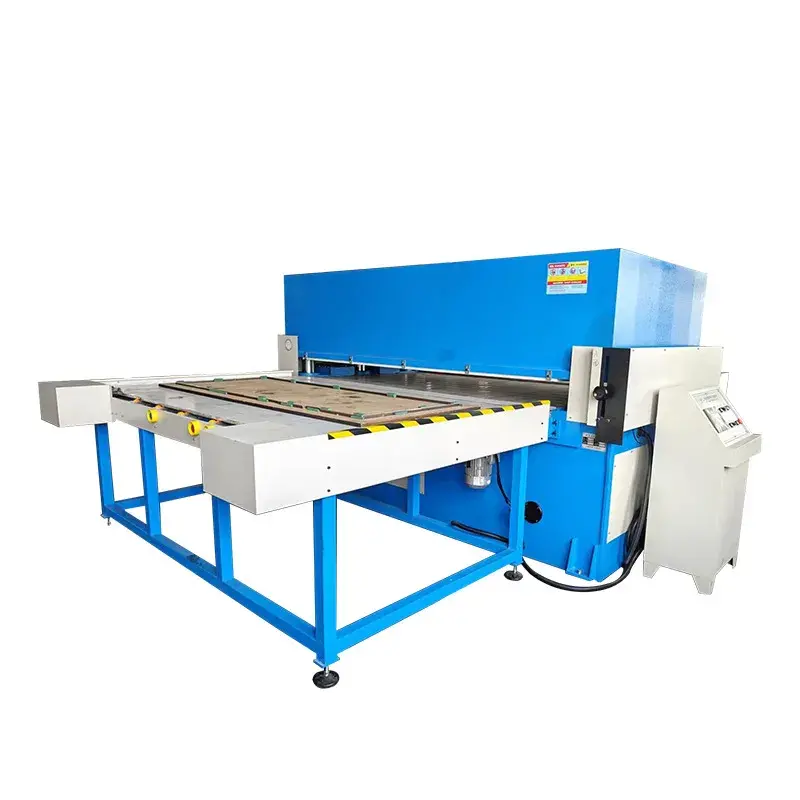
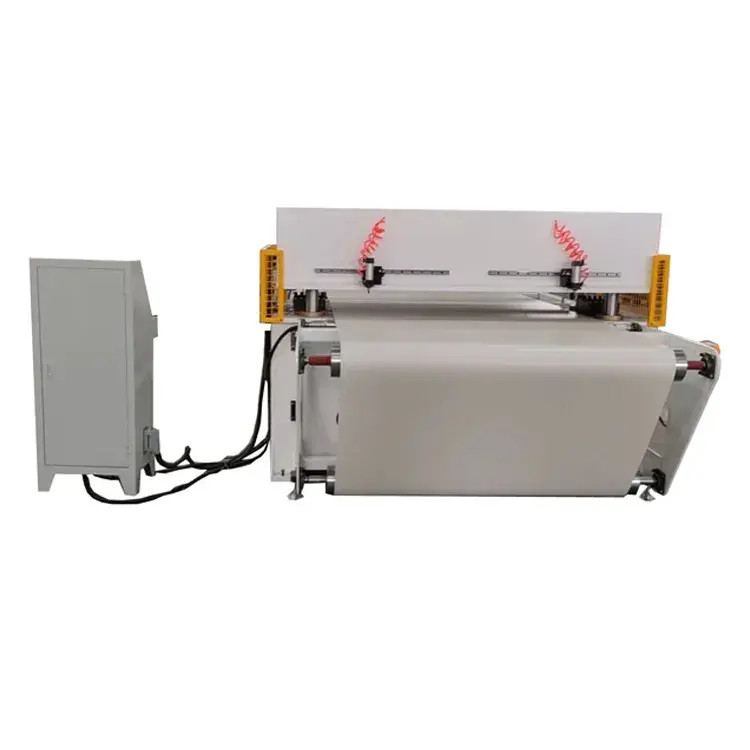
Conveyor belt die cutting machine represents a highly specialized class of industrial machinery, engineered to execute precise cutting operations on a diverse range of flexible and semi-rigid materials. This equipment is designed to fabricate components in predetermined geometries, dimensions, and configurations with exactitude. Distinguishing itself from conventional die cutting apparatus that typically employ manual material handling or operate in an intermittent processing mode, the conveyor belt die cutting machine incorporates a continuous conveyor system as its fundamental material conveyance infrastructure.
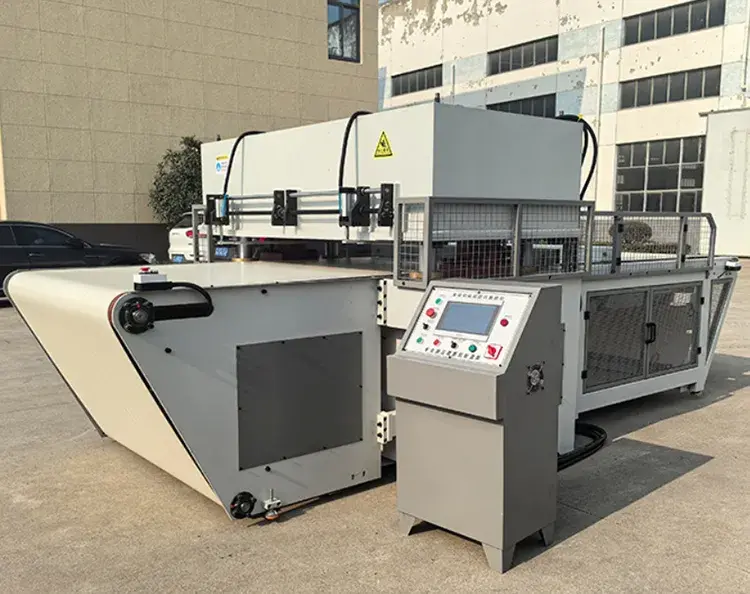
The key components and roles of conveyor belt die cutting machine
- Conveyor Belt System:
The conveyor belt is the backbone of the machine, responsible for the continuous and stable transport of raw materials. Typically made of high-wear-resistant materials such as polyurethane (PU), rubber, or reinforced fabric, it is designed to withstand the pressure of die cutting and maintain flatness to prevent material shifting. The belt’s speed is adjustable via a variable frequency drive, allowing operators to synchronize it with the die-cutting speed based on material type and thickness. - Die Cutting Unit:
The cutting dies are custom-made based on the desired shape or pattern—common types include steel rule dies (for flexible materials) and rotary dies (for high-speed, continuous cutting). The pressure mechanism, often driven by hydraulic, pneumatic, or mechanical systems, applies consistent force to the die, ensuring it penetrates the material (without damaging the conveyor belt) to achieve clean, burr-free cuts. For our conveyor belt die cutting machine, the die is mounted on a cylindrical roller that rotates in sync with the conveyor belt, enabling non-stop cutting of long material rolls. - Material Feeding and Tension Control:
Before entering the die-cutting unit, materials (e.g., adhesive tapes, foams, fabrics, paper) are fed into the machine via a roll holder or unwinding system. A tension control device is integrated here to maintain constant tension on the material roll, preventing slack or stretching that could distort the cutting accuracy. Tension control is particularly critical for elastic or thin materials, as even minor tension fluctuations can lead to inconsistent cut sizes. - Waste Removal and Finished Product Collection:
After cutting, the conveyor belt die cutting machine separates the finished cut parts from the remaining material (known as “web waste”). A waste removal system—which may include vacuum suckers, air blowers, or mechanical scrapers—removes the web waste and conveys it to a collection bin or recycling unit. The finished products, meanwhile, are either collected directly onto a take-up roll (for roll-to-roll processing) or discharged onto a conveyor table for manual sorting or further assembly.
The working principle of conveyor belt die cutting machine
- Material Feeding: The raw material roll is mounted on the unwinding system, and the leading edge of the material is fed onto the conveyor belt.
- Tension Adjustment: The tension control device adjusts the material tension to ensure it lies flat and stable on the conveyor belt.
- Conveying and Cutting: The conveyor belt moves the material at a pre-set speed into the die-cutting unit. As the material passes under (or through) the cutting die, the pressure mechanism applies force to the die, cutting the material into the desired shape. For rotary die cutting, the die roller rotates in sync with the conveyor belt, cutting the material continuously as it moves.
- Product Collection: The finished cut parts are either wound onto a take-up roll (for roll-to-roll applications) or discharged into a collection area. If a vision inspection system is installed, it checks the parts for defects and diverts rejects.
- Continuous Operation: The process repeats non-stop until the material roll is exhausted, with the control system maintaining consistent parameters to ensure uniform quality throughout the production run.
Conveyor belt die cutting machine is to automate and optimize the die cutting process, thereby facilitating high-throughput manufacturing with exceptional consistency and efficiency across numerous industrial sectors. By integrating the precision inherent to die cutting technology with the uninterrupted motion of the conveyor belt, it minimizes the requirement for frequent human intervention, reduces material wastage, and ensures a uniform standard of cutting quality throughout extended production runs, even when processing elongated material rolls.
 English
  Spanish
  Portuguese
  German
  French