
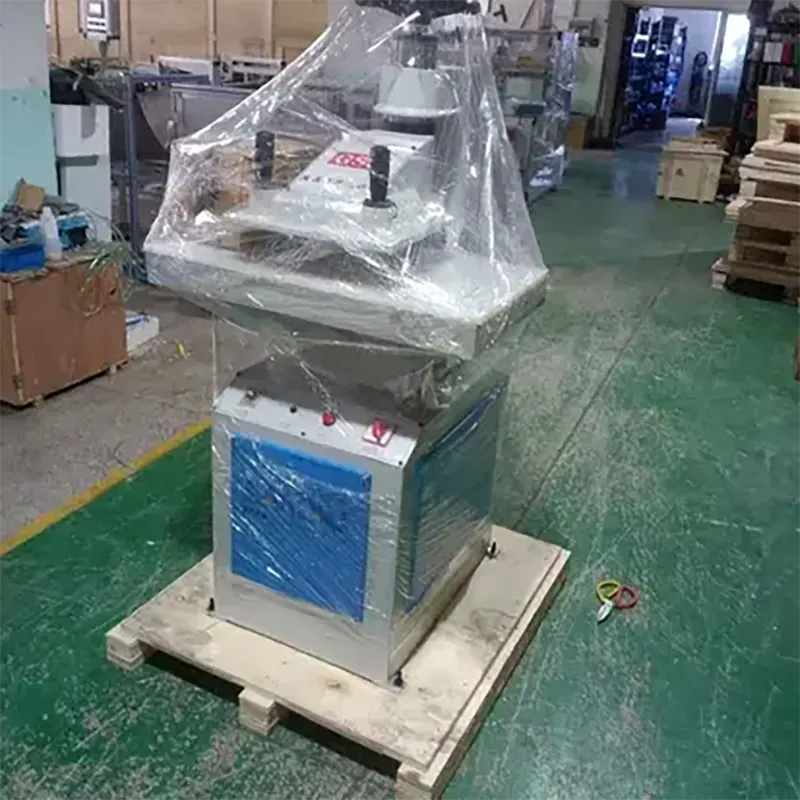
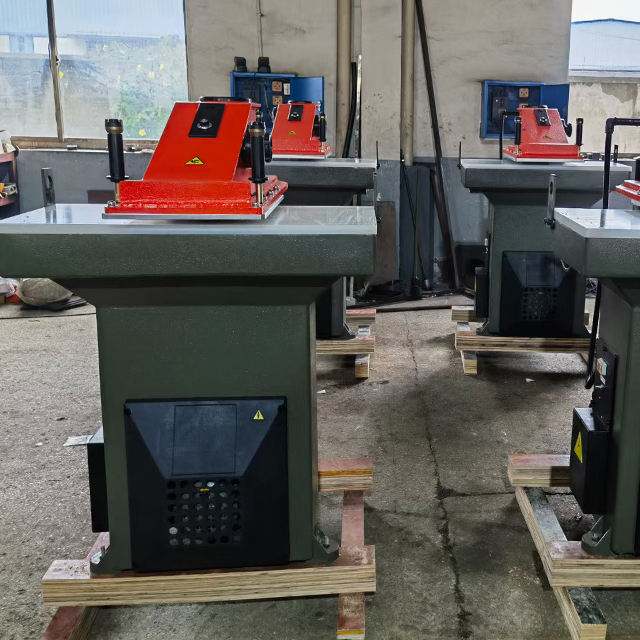
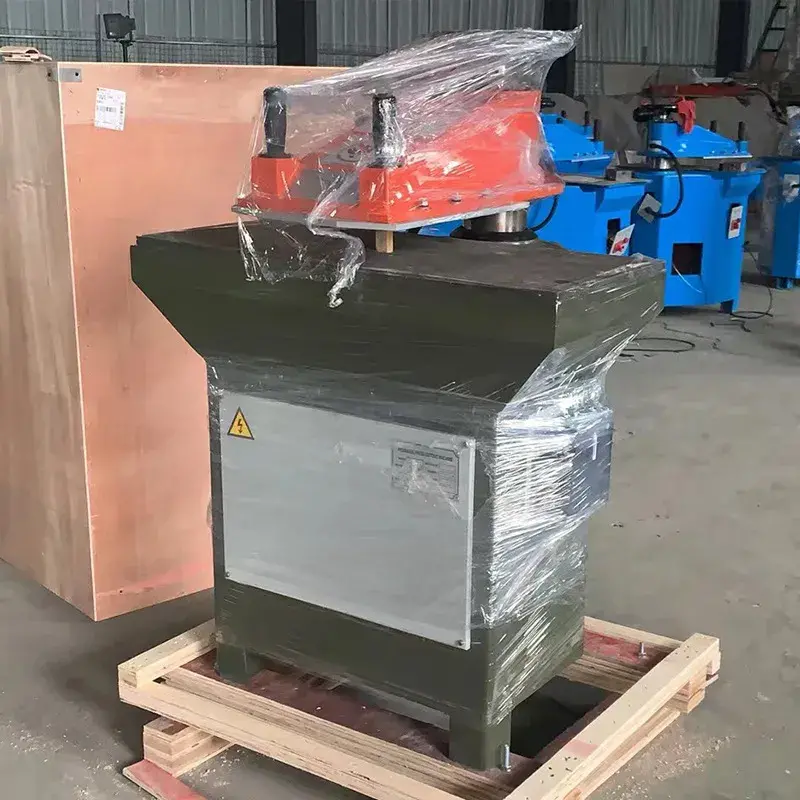
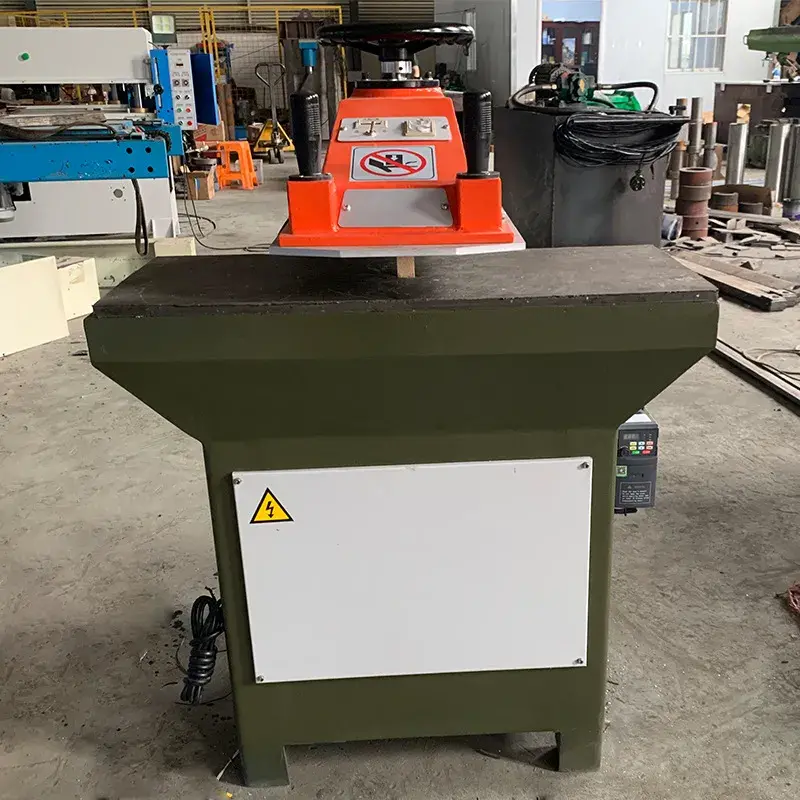
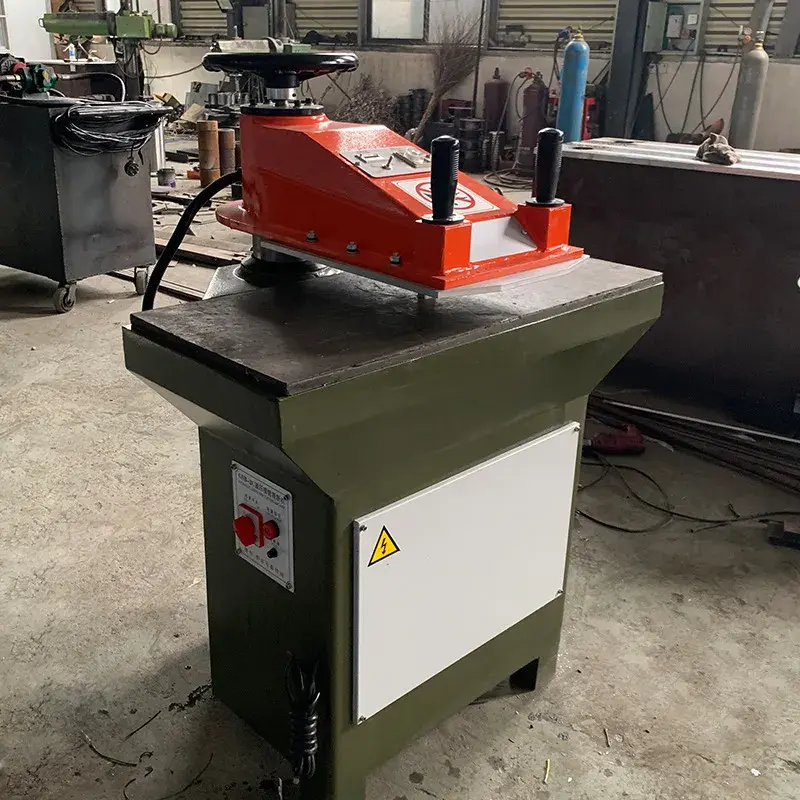
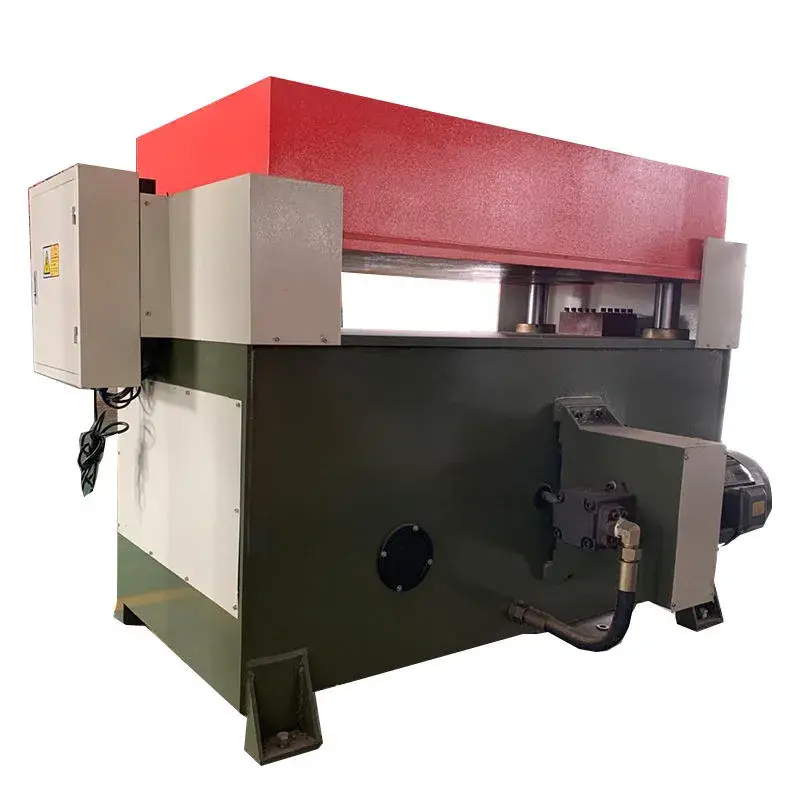
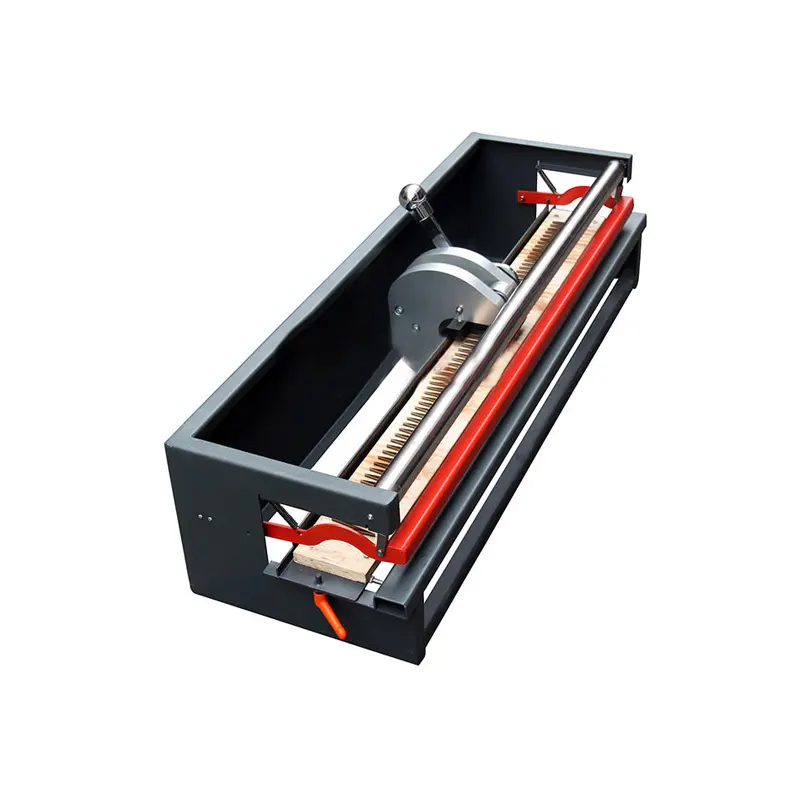
Swing arm die cutting clicker shoe making redefines efficiency, accuracy, and reliability in shoe material processing. Engineered specifically to meet the rigorous demands of the shoe making industry, this specialized machinery integrates advanced die-cutting technology with an ergonomic swing arm design, delivering consistent, high-quality cuts for every critical shoe component. It stands as an indispensable asset for footwear manufacturers seeking to optimize production workflows, minimize material waste, and uphold the strict quality standards that define premium shoe craftsmanship.
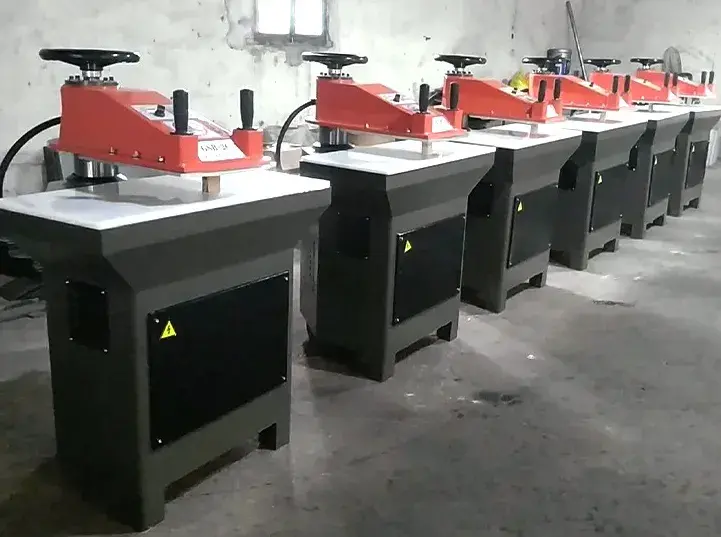
The technical parameters of swing arm die cutting clicker shoe making
| Model | DSADM-10 | DSADM-12 | DSADM-16 | DSADM-20 |
| Max. Cutting Force | 100 KN | 120 KN | 160 KN | 200 KN |
| Max scissoning force | 0.10 m/s | 0.098 m/s | 0.10 m/s | 0.10 m/s |
| Seissor speed | 5-75 mm | 5-60 mm | 5-75 mm | 5-75 mm |
| Stroke adjustment | 60-120 mm | 60-120 mm | 65-150 mm | 65-150mm |
| Distance between upper table and lower able | 400*800 mm | 400*900 mm | 450*900 mm | 500*1000 mm |
| Overall dimension | 850*700*1250 mm | 900*800*1300 mm | 900*900*1380 mm | 1000*900*1380 mm |
| Motor power | 0.75 KW | 1.1 KW | 1.1 KW | 1.5 KW |
The working principle of swing arm die cutting clicker shoe making
- Material Loading: A sheet/roll of material (e.g., fabric, foam, leather) is placed on the anvil bed, aligned with the lower die.
- Die Engagement: The operator triggers the swing arm via lever, causing it to pivot downward.
- Cutting Action: The upper die (mounted on the swing arm) presses into the lower die, shearing the material between the die’s sharp edges.
- Cycle Completion: The swing arm retracts upward, and the cut part is removed; the process repeats for batch production.
Why choose our swing arm die cutting clicker shoe making?
Swing arm die cutting clicker shoe making combines decades of precision engineering expertise with modern industrial demands, delivering a cutting solution that balances accuracy, efficiency, and safety. Its ability to adapt to custom dies, comply with international testing standards, and operate across multiple industries makes it a valuable investment for businesses seeking to optimize productivity and quality. Backed by robust construction and user-centric design, it ensures consistent performance, reduced operational costs, and long-term reliability—empowering your operations to meet and exceed industry expectations.
 English
  Spanish
  Portuguese
  German
  French