
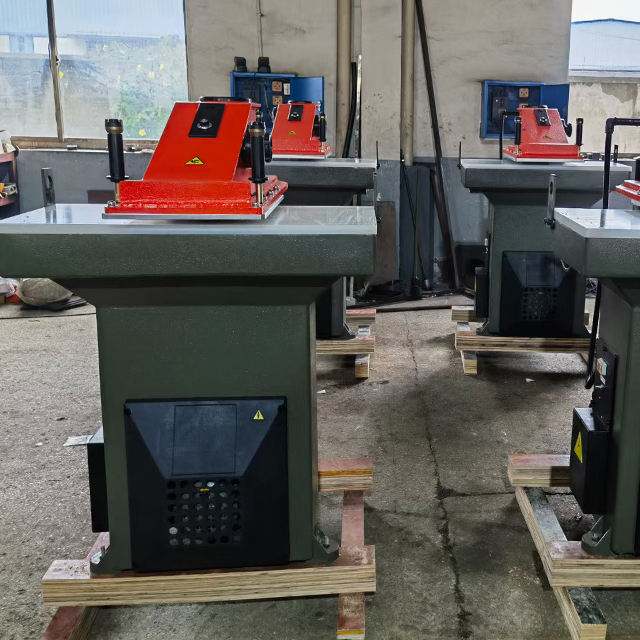
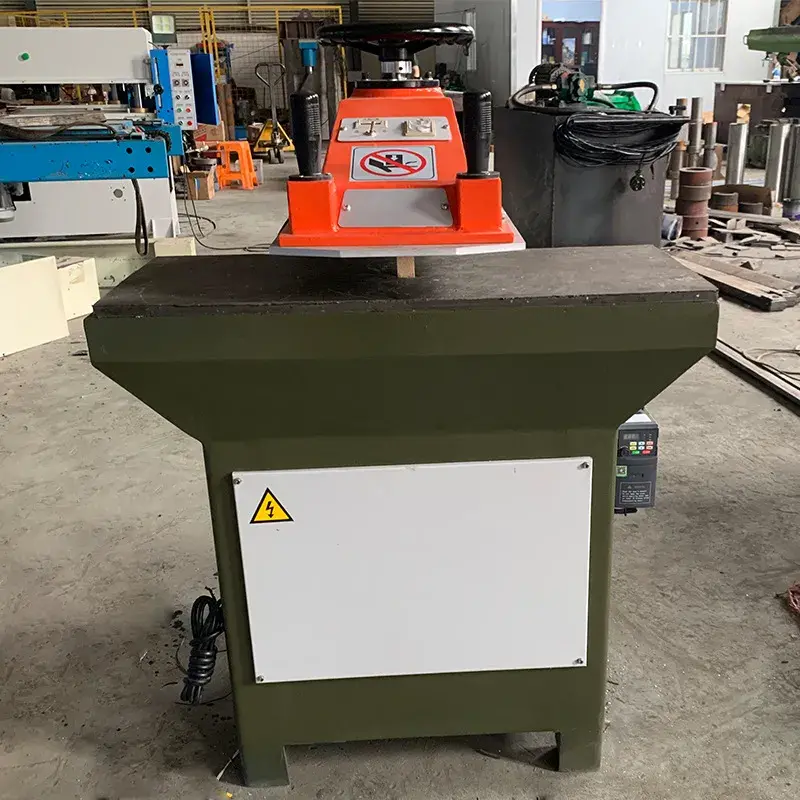
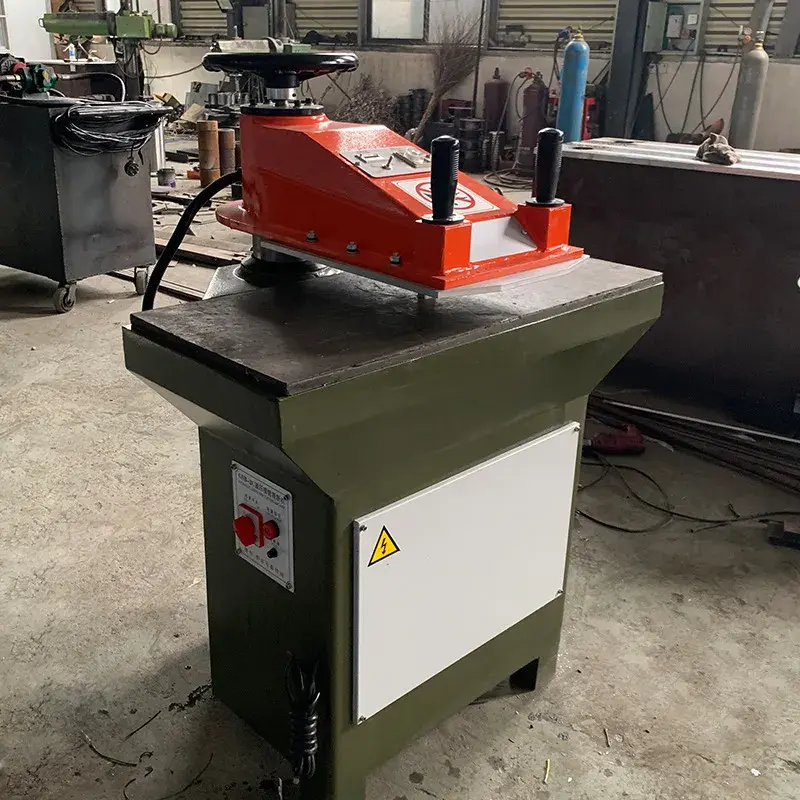
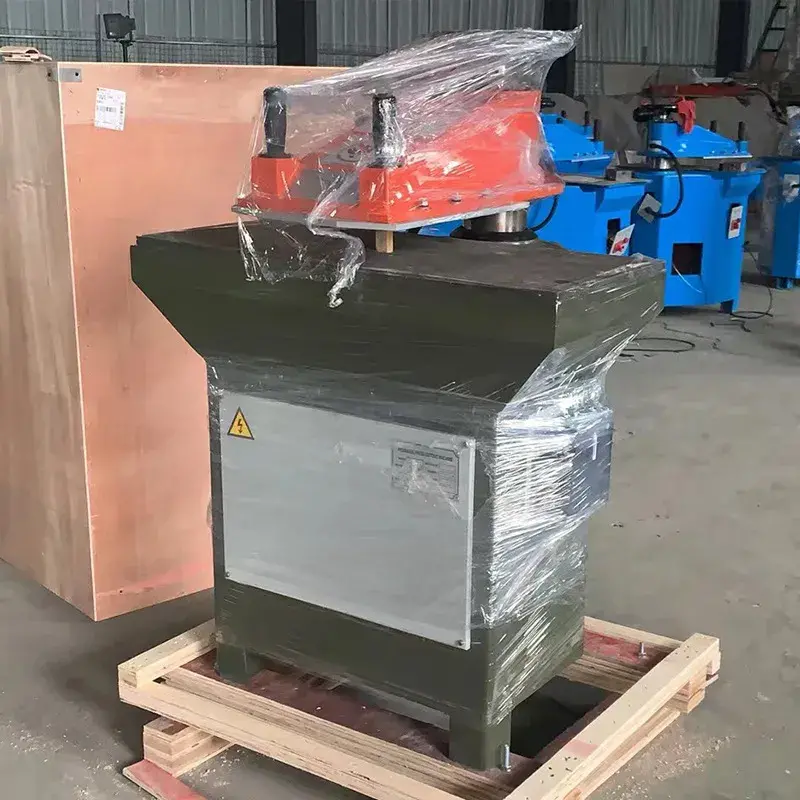
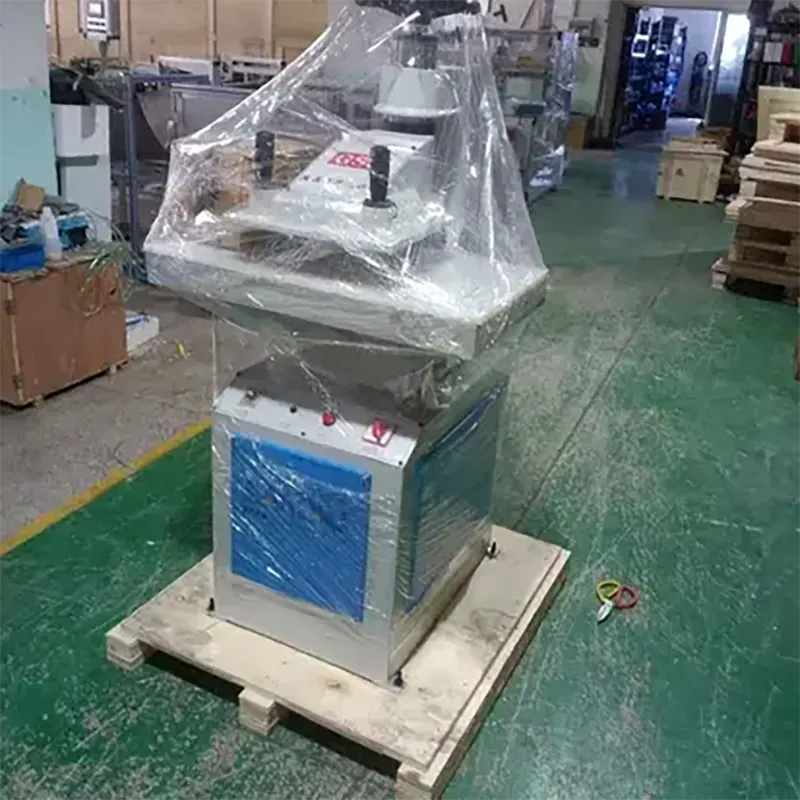
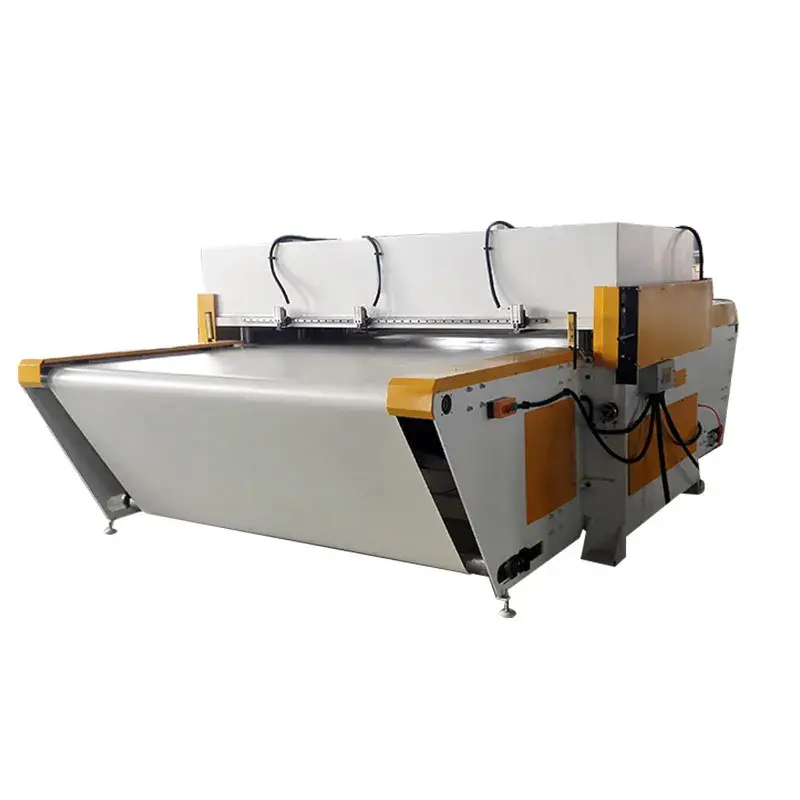
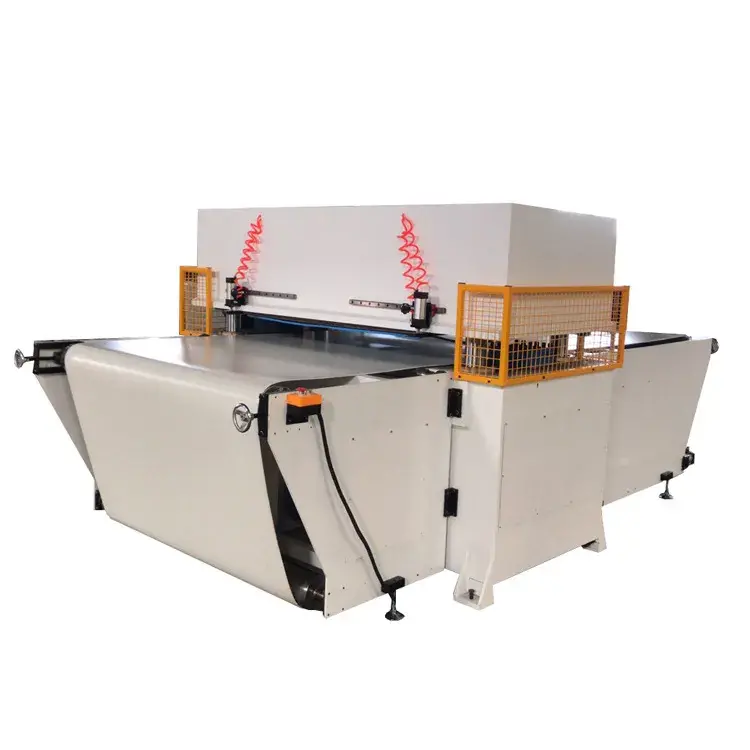
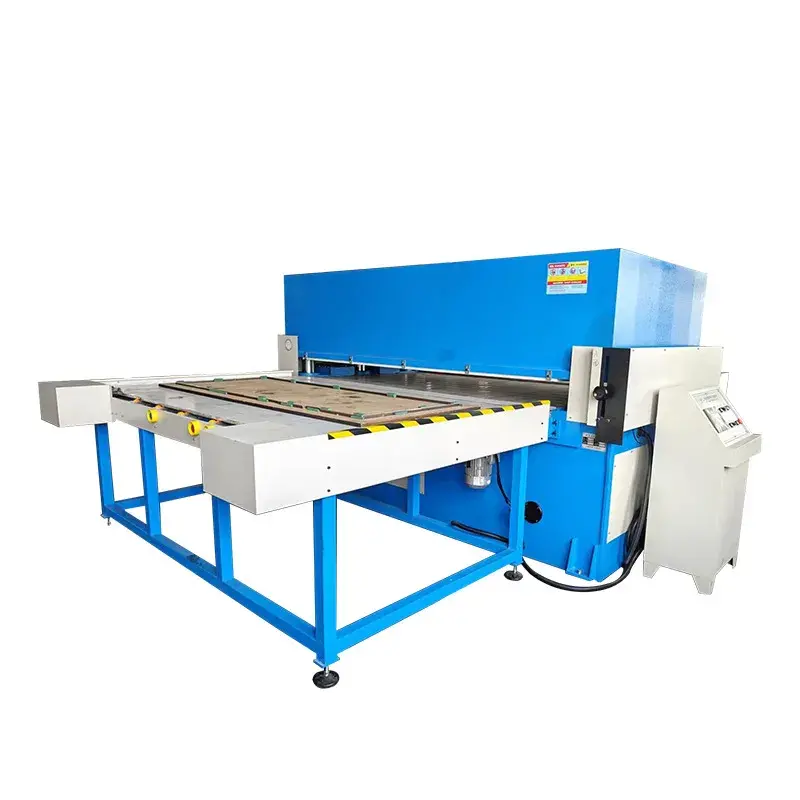
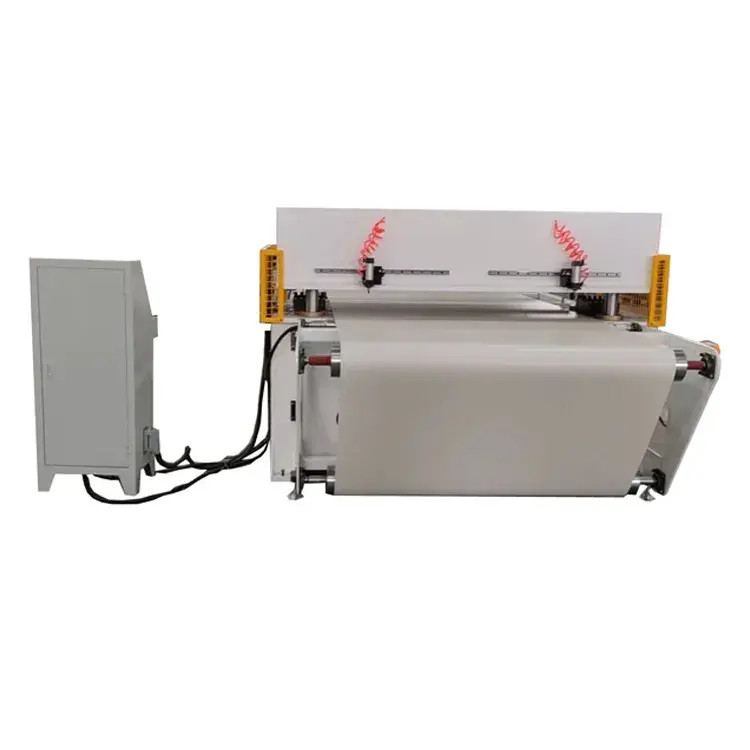
Swing arm die clicker (also known as a swing arm clicker press or swing beam die cutting machine) is a specialized mechanical press designed for precision die cutting of soft to semi-rigid materials. Its defining feature is a swinging arm mechanism that actuates the cutting die, enabling efficient, repeatable, and high-accuracy cutting of materials into custom shapes. Widely used in manufacturing, packaging, textiles, and automotive industries, it combines mechanical leverage with die precision to streamline production workflows.
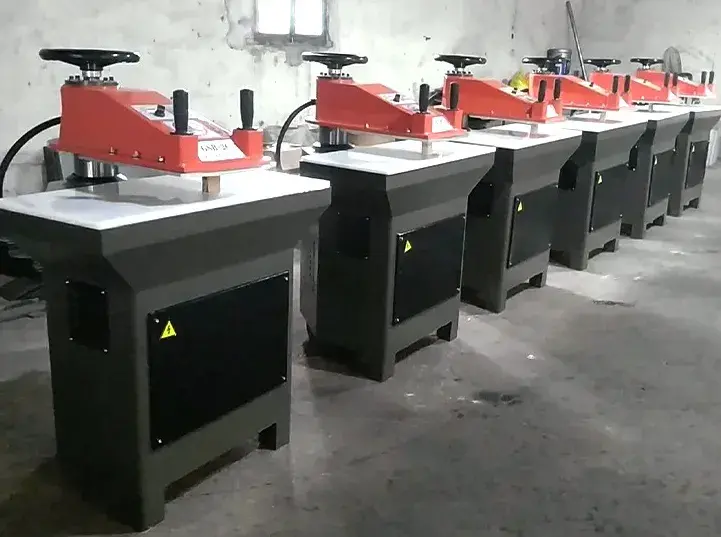
The key components of swing arm die clicker
| Component | Function |
|---|---|
| Swing Arm (Beam) | Pivots on a fixed axis to deliver downward force; houses the upper die holder. |
| Die Set (Upper/Lower) | Custom tooling (steel rule dies, laser-cut dies) that defines the cut shape. |
| Anvil Bed | Stationary base with a flat, rigid surface to support the lower die and material. |
| Actuation System | Hydraulic drive for arm movement. |
| Adjustment Controls | Tension regulators, stroke length settings, and material guides for precision. |
| Safety Guards | Protective barriers (e.g., light curtains, interlocks) to prevent operator injury. |
The working principle of swing arm die clicker
- Material Loading: A sheet/roll of material (e.g., fabric, foam, leather) is placed on the anvil bed, aligned with the lower die.
- Die Engagement: The operator triggers the swing arm via lever, causing it to pivot downward.
- Cutting Action: The upper die (mounted on the swing arm) presses into the lower die, shearing the material between the die’s sharp edges.
- Cycle Completion: The swing arm retracts upward, and the cut part is removed; the process repeats for batch production.
Swing arm die clicker is a versatile, cost-effective solution for precision die cutting across industries. From manual benchtop models for crafts to automated hydraulic systems for heavy manufacturing, its adaptability makes it a staple in modern production lines. By understanding its types, technical parameters, and maintenance needs, businesses can optimize cutting processes, reduce waste, and scale production efficiently. As technology advances, the integration of automation and smart features will further enhance its role in the future of manufacturing.
 English
  Spanish
  Portuguese
  German
  French